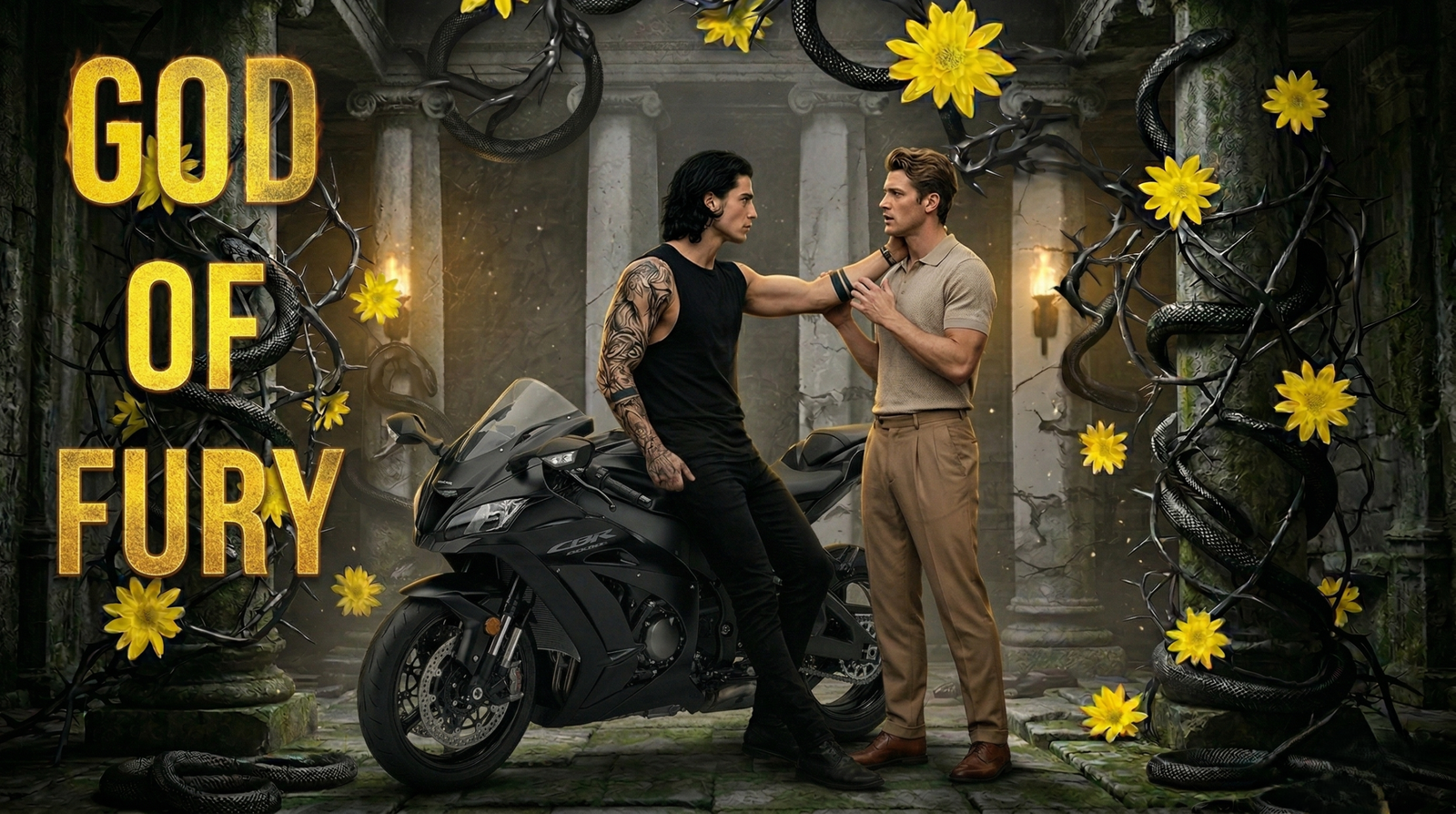
The Chaos and the Calm: Why God of Fury is Rina Kent’s Most Explosive Release Yet.
In the sprawling, shadowed universe of Rina Kent’s Legacy of Gods, where the air is thick with the scent of old money, dark secrets, and the intoxicating perfume of obsession, there has always been a tension simmering just beneath the surface. For years, readers have navigated the labyrinthine corridors of the King and Sokolov empires, witnessing the rise of a new generation born from the wreckage of their parents’ jagged legacies. But nothing—no amount of preparation or previous heartbreak—could have braced the literary world for the tectonic shift that is God of Fury.
This is not merely another dark romance; it is a visceral, sensory assault. It is the definitive collision between the chaos of a soul that refuses to be contained and the calm of a spirit that has learned to thrive in the silence. In the pairing of Nikolai Sokolov and Brandon King, Kent has not only delivered her first M/M (male/male) romance within this series but has also crafted her most explosive, emotionally resonant work to date.
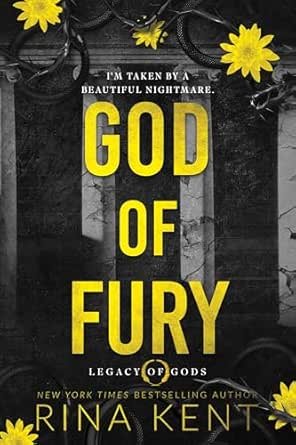
Ratings
Overall Rating: ⭐⭐⭐⭐⭐ (5/5)
Spice Rating: 🌶️🌶️🌶️🌶️🌶️ (5/5 – Explicit, dark, and frequent)
The Architect of Chaos: Nikolai Sokolov
To understand the explosion, one must first understand the spark. Nikolai Sokolov is a character draped in the vibrant colors of madness and charm. He is a kaleidoscope of contradictions—a golden boy with a smile that cuts like a razor and eyes that dance with a dangerous, unpredictable light. As the son of Adrian and Lia Sokolov, the weight of a bloody heritage rests on his shoulders, but Nikolai carries it with a deceptive lightness, as if the darkness is merely a cloak he chooses to wear for sport.
In God of Fury, Nikolai is the personification of “The Chaos.” His presence in a room is like oxygen feeding a fire; he is loud, intrusive, and relentlessly energetic. Yet, through Kent’s evocative prose, we see the cracks in his porcelain exterior. His chaos is a defensive mechanism, a rhythmic thrumming designed to drown out the existential dread of being “too much” and “not enough” all at once. He is a storm looking for a place to land, a hurricane searching for an eye that can withstand his wind.
The Fortress of Calm: Brandon King
Then, there is Brandon King. If Nikolai is a wildfire, Brandon is the deep, dark ocean—still on the surface, but possessing a crushing pressure beneath. As the son of Jonathan and Aurora King, Brandon has been raised in a world of absolute control and frigid expectations. He is the “The Calm,” a man of few words and deliberate actions. His silence is not an absence of thought, but a fortress built to protect a soul that feels with a terrifying intensity.
Brandon is the ultimate enigma. He moves through the halls of Royal Elite University like a ghost, a monolith of stoicism that refuses to be moved. While his peers chase power and pleasure, Brandon exists in a vacuum of his own making. He is the anchor that the world assumes cannot be broken, the pillar of strength that requires no one. But in the quiet moments—the scenes where Kent describes the way he watches the world through a lens of detached observation—we realize that Brandon isn’t just calm; he is waiting for someone brave enough to disturb his peace.
The Collision: Where Fire Meets Water
The brilliance of God of Fury lies in the chemical reaction that occurs when these two forces collide. It is not a gentle meeting; it is a high-speed crash on a rain-slicked highway. When Nikolai sets his sights on Brandon, it isn’t out of simple curiosity. It is an elemental pull. Nikolai recognizes in Brandon the one thing he lacks: a stillness that cannot be shaken. Conversely, Brandon finds in Nikolai a noise that he can no longer ignore.
The descriptive power of their interactions is where the novel truly earns its “explosive” title. Kent describes their tension as something physical, an electric charge that makes the air crackle. Their first encounters are a dance of dominance and defiance. There is a specific scene in the rain where the atmosphere feels heavy with the scent of petrichor and unspoken desire—a moment where the “Chaos” and the “Calm” finally blur into a singular, agonizing frequency.
The transition from enemies—or at least, antagonistic strangers—to something deeper is handled with a delicate brutality. The romance is “dark” not just because of the external threats or the spicy encounters, but because of the psychological dismantling both men must undergo. They have to strip away the legacies of their fathers and the masks of their houses to see each other clearly.
Breaking the Mold: A New Frontier for the Legacy
While Rina Kent has built her empire on dark, heteronormative romances that push boundaries, God of Fury represents a daring evolution. By placing two of her most anticipated male leads in a central romance, she challenged the expectations of her genre and her readership. The result was an explosion of vulnerability.
There is a raw, unvarnished quality to the intimacy between Niko and Bran. It is gritty, possessive, and fiercely protective. Kent doesn’t shy away from the complexities of their sexuality or the societal pressures of their elite upbringing. Instead, she leans into them, using the “Forbidden” trope to heighten the stakes. The secrecy of their bond acts as a pressure cooker, making every touch feel like a revolution and every confession feel like a betrayal of the world they were raised to lead.
The Sensory Prose: Painting the Darkness
Kent’s writing in this installment feels more atmospheric than ever. She uses shadows and light to mirror the internal states of her characters. The “Chaos” is often reflected in the strobe lights of clubs, the roar of engines, and the frenetic energy of Nikolai’s movements. The “Calm” is found in the sterile, cold libraries and the shadowed corners of the King estate where Brandon seeks refuge.
The prose doesn’t just tell a story; it evokes a feeling. When Nikolai is spiraling, the sentences become shorter, more jagged, mimicking a heartbeat racing out of control. When Brandon is in his element, the descriptions are fluid and rhythmic, like the steady pulse of a sleeping giant. This stylistic choice ensures that the reader doesn’t just witness the explosion—they feel the heat of the blast.
Conclusion: The Aftermath of Fury
God of Fury is more than a book; it is a milestone. It stands as a testament to Rina Kent’s ability to reinvent her own tropes and breathe new life into a long-running series. By the time the final page is turned, the labels of “Chaos” and “Calm” have lost their meaning, because Nikolai and Brandon have become each other’s equilibrium. They have found a way to exist in the middle of the storm, creating a world where the noise is beautiful and the silence is safe.
It is Kent’s most explosive release because it takes the greatest risks. It risks the comfort of the status quo to explore the terrifying depths of a love that shouldn’t exist but refuses to die. It is a story of how two broken halves don’t just make a whole, but create something entirely new—a god-tier fury that burns away the expectations of the past to forge a future in the ashes.
Final Thoughts
In the end, God of Fury leaves the reader breathless, as if they’ve just emerged from the heart of a tempest. It is a hauntingly beautiful exploration of identity, trauma, and the redemptive power of being truly seen by another person. For those who have followed the Legacy of Gods series from the beginning, this book feels like the culmination of everything Kent has been building toward. For new readers, it is a masterclass in dark, character-driven romance.
Nikolai and Brandon are not just characters on a page; they are a haunting melody of chaos and calm that lingers long after the book is closed. Rina Kent didn’t just write a romance; she unleashed a force of nature, confirming once and for all that in the world of dark romance, she remains the reigning queen of the storm.